Environment and economy go hand in hand, EPA administrator says
Upcoming Events
Related News

Key Takeaways
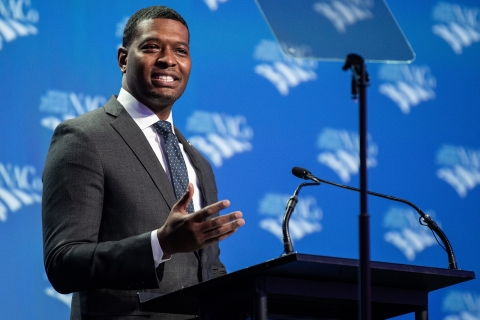
To foster community growth, economic development and environmental restoration, the Environmental Protection Agency needs partners like county officials to help craft meaningful policy, said EPA Administrator Michael Regan, Feb. 15 in an address to NACo members at the Legislative Conference.
“Believe me when I say that I understand that EPA actions can either help or hurt local efforts,” he said, “and it’s critical that we have a shared working relationship. You know your communities better than the federal government ever could and that makes our partnership essential.”
“Environmental protection and economic development are not mutually exclusive; they actually go hand in hand,” he noted.
The EPA is ramping up brownfield restoration funding and projects with an emphasis on community partnerships, he said, emphasizing that partnerships with community leaders is vital to identifying the most critical infrastructure improvements and restoration opportunities.
“Thanks to the bipartisan infrastructure law, we have a once-in-a-generation opportunity to turn brownfield sites all across this nation into economic engines,” said Regan. “This is a game changer in terms of our ability to empower local communities, large and small, urban and rural, to address the long standing, environmental, economic and health challenges created by brownfields.”
The EPA is creating opportunities for counties to invest further in water infrastructure, he said. Acknowledging the struggles of counties on the frontlines of fighting climate change impacts, lead pipes and crumbling infrastructure, Regan said the EPA will release $7.4 billion in 2022 to state revolving funds and for the next five years to come to help fix water infrastructure.
Regan heralded Newark, N. J. for their work in partnership with Essex County to remove 100 percent of all known lead pipes, a complicated and expensive undertaking completed in 36 months instead of the original eight-year plan. “We can replicate those efforts in communities all across the country by working together,” Regan said.
Regan and his efforts with the EPA focus heavily on the importance of partnership with communities, educating county leadership on opportunities both currently available and upcoming through funding releases and competitive grants, as well as the importance of making long-lasting investments from American Rescue Plan and Infrastructure Investment and Jobs Act funding.
“The implementation of the infrastructure law calls for strong partnership,” he said, “and the EPA is not only ready, but we’re excited to work with our local partners to ensure that all communities see the full benefits of this investment.”
Attachments
Related News

The "Backslash Backlash:" Counties pivot in the data center buildout
Data center development across the country has put a new focus on county policies, how they regulate land use and more for local residents and how they could shape the path for economic growth built around artificial intelligence and information technology.

Chips, Compute and Counties
NACo CEO Matt Chase: "The fundamentals remain the same [when it comes to data centers]: demand a seat at the table, study the supply chain, understand the financing capital stacks, ask hard questions and fight for a deal that leaves your community better off — not used and abused."

Water matters for data centers
Data centers often cluster in a few places, need treated water and use the most when demand is already high in hot weather. This growing demand is driving data center development nationwide, accelerating local proposals and the importance for county officials to understand impacts to energy, land and water resources.